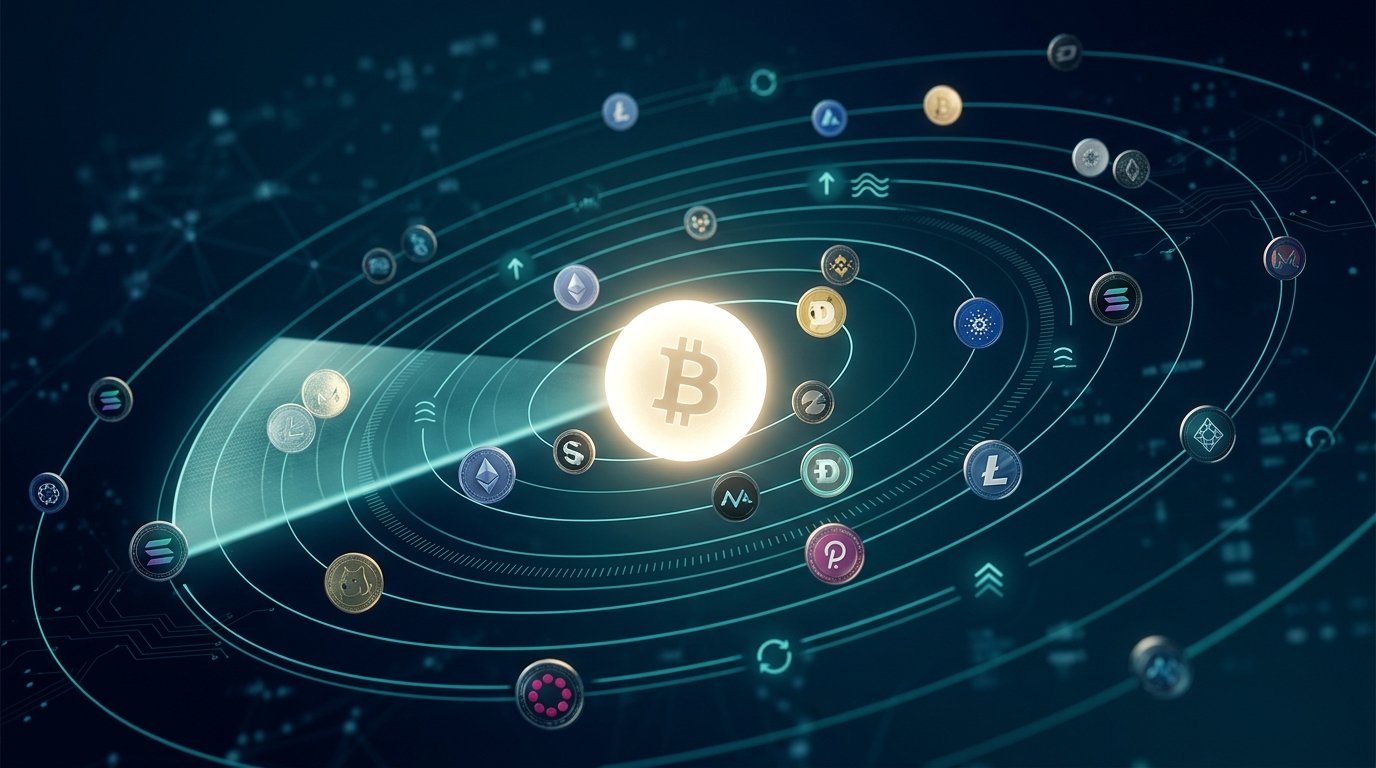
Introduction: Identifying Altcoin Opportunities
The term altcoin refers to any cryptocurrency other than Bitcoin. The altcoin universe is vast, encompassing thousands of projects with different technologies, governance models, and use cases. In the current market cycle, altcoins have demonstrated the capacity to significantly outperform Bitcoin during bull phases while also exhibiting deeper drawdowns during corrections. Understanding which altcoins offer genuine value—and which are speculative experiments—is the central challenge for any serious crypto investor.
This article serves as a structured framework for identifying high-conviction altcoin opportunities in 2026 and beyond. We examine the major sectors driving innovation, the criteria that distinguish resilient projects from fleeting trends, and the portfolio management principles that help you capture upside while protecting capital. For broader context on cryptocurrency market dynamics, see our Market Analysis section.
Criteria for Selecting Promising Altcoins
Not all altcoins are created equal. The difference between a project that builds enduring value and one that fades after its initial hype cycle often comes down to a handful of fundamental factors. Before evaluating specific sectors, every investor should understand the evaluation framework that separates durable projects from speculative noise.
Technology and Product-Market Fit
The first criterion is whether the project solves a real problem with a superior solution. A cryptocurrency with strong technology but no clear use case will struggle to attract sustained adoption. Look for projects that have achieved product-market fit—meaning users are actively choosing their platform not because of financial incentives, but because the product genuinely improves their workflow or financial outcome. Metrics like daily active addresses, transaction volume, and revenue (if the protocol charges fees) provide concrete evidence of genuine usage.
Team, Backers, and Community
A project's team is often the strongest predictor of its long-term success. Investigate whether the founders have relevant technical or entrepreneurial experience, whether they have shipped products before, and whether they communicate transparently with the community. Venture capital backing from reputable firms—such as a16z crypto, Paradigm, Sequoia Capital, or Multicoin Capital—provides additional validation, though it is not a guarantee of success. Equally important is the project's community. A vibrant, engaged community of developers, users, and supporters creates network effects that are difficult to replicate. On Crypto News, we frequently cover project launches and partnerships that signal strong team execution.
Tokenomics and Valuation Metrics
Tokenomics—the economic design of a cryptocurrency—is one of the most overlooked yet critical aspects of altcoin analysis. Key metrics include the total and circulating supply, inflation rate, vesting schedules for team and investor allocations, and whether the token captures value from the protocol's activity. Market capitalization measures the value of all circulating tokens, while fully diluted valuation (FDV) represents the total value if all tokens were released. A large gap between market cap and FDV can indicate future sell pressure from unlocking tokens. Investors should also examine the total value locked (TVL) for DeFi protocols and comparable metrics for other sectors to gauge real economic activity.
Competitive Positioning
The cryptocurrency space is intensely competitive. A project may have brilliant technology, but if it competes in a saturated category without a clear differentiation strategy, its long-term prospects are dim. Evaluate whether the project occupies a unique niche, whether it has defensible moats such as network effects or switching costs, and whether incumbents are likely to copy its innovations. For a broader understanding of blockchain competitive dynamics, see our Blockchain section.
Regulatory and Security Considerations
Regulatory scrutiny of cryptocurrencies has intensified globally. Projects that proactively engage with regulators, obtain necessary licenses, and implement robust compliance frameworks are better positioned for long-term survival. Security is equally paramount. A single exploit that drains user funds can destroy trust permanently. Review whether projects undergo regular third-party security audits, maintain bug bounty programs, and have a track record of responsible incident response.
Layer 1 Blockchain Ecosystems
Layer 1 blockchains are foundational networks that process and finalize transactions independently. They are the infrastructure upon which all other crypto activity—tokens, smart contracts, decentralized applications—ultimately rests. In the current market cycle, several Layer 1 ecosystems have distinguished themselves through technological innovation, growing developer activity, and expanding user bases.
Solana (SOL)
Solana has established itself as one of the fastest and most cost-effective Layer 1 blockchains, capable of processing thousands of transactions per second with fees that often measure in fractions of a cent. Its Proof of History consensus mechanism provides a novel approach to timestamping that dramatically improves throughput. Solana's ecosystem has exploded with DeFi protocols, NFT platforms, and memecoin projects. The network's resilience through the FTX collapse demonstrated strong underlying fundamentals. For investors, Solana offers exposure to a high-growth ecosystem, though its past outages remind us that technical reliability remains a consideration.
Cardano (ADA)
Cardano distinguishes itself through a peer-reviewed, academic approach to development. Rather than rushing features to market, the Cardano Foundation prioritizes rigorous research and formal verification of smart contracts. This methodical approach has attracted a loyal community and institutional interest, particularly in regions where regulatory compliance is paramount. Cardano's hydra scaling solution and growing DeFi ecosystem position it as a stable, long-term contender in the Layer 1 landscape. Investors who value methodical execution over rapid iteration often find Cardano an attractive diversifier.
Avalanche (AVAX)
Avalanche's unique selling proposition is its subnet architecture, which allows developers to launch application-specific blockchains with customized rules while maintaining interoperability with the primary network. This flexibility has made Avalanche particularly appealing to enterprise use cases, institutions, and gaming projects that require dedicated throughput. The network's low finality time—under two seconds—makes it one of the fastest settlement layers available. Avalanche's emphasis on real-world asset tokenization and institutional partnerships provides a clear path to sustainable growth beyond speculative trading activity.
Sui (SUI) and Aptos (APT)
Sui and Aptos represent the next generation of Layer 1s built by teams with deep expertise from Meta's blockchain division. Both networks emphasize parallel transaction processing, which enables high throughput for specific types of applications such as gaming and social media. Sui's object-centric model and Aptos's Move programming language offer technical improvements over existing smart contract platforms. While both projects are relatively young, their backing, technical pedigree, and focus on scalable consumer applications make them worth monitoring for investors comfortable with earlier-stage risk.
Layer 2 Scaling Solutions
Layer 2 (L2) scaling solutions are protocols built on top of existing Layer 1 blockchains—most notably Ethereum—to increase transaction throughput, reduce fees, and improve user experience without compromising security. As Ethereum continues to consolidate its position as the leading smart contract platform, L2s have become essential infrastructure for the broader crypto ecosystem. They are among the fastest-growing sectors in the industry.
Arbitrum (ARB)
Arbitrum is the largest Ethereum Layer 2 by total value locked and daily transaction volume. Its Optimistic Rollup technology bundles thousands of transactions off-chain and submits a single proof to Ethereum, inheriting the base layer's security while offering fees that are often 90 percent lower than Ethereum mainnet. Arbitrum's thriving DeFi ecosystem, which includes decentralized exchanges, lending protocols, and yield aggregators, makes it a primary gateway for users moving activity from mainnet to L2. The ARB token provides governance rights over the Arbitrum DAO, which controls a substantial protocol treasury.
Optimism (OP)
Optimism pioneered the Optimistic Rollup architecture and remains a foundational player in the Ethereum scaling ecosystem. Its Superchain vision aims to create a interconnected network of L2 chains sharing security and liquidity, which could fundamentally reshape how blockchains scale together. Optimism's emphasis on public goods funding through its retroactive public goods round (RetroPGF) has also built considerable goodwill within the Ethereum community. The OP token governs the Optimism Collective, one of the most ambitious experiments in decentralized governance.
zkSync and StarkNet
Zero-knowledge (zk) rollups represent the next evolution in Layer 2 technology. Unlike optimistic rollups, which rely on challenge periods to validate transactions, zk-rollups use cryptographic proofs to validate batches of transactions instantly. This results in faster finality and potentially stronger security guarantees. zkSync, developed by Matter Labs, and StarkNet, built by StarkWare, are the two leading zk-rollup platforms. Both have attracted substantial developer activity and ecosystem funding. As zk-rollup technology matures and becomes more cost-effective, these platforms are expected to capture a growing share of Ethereum's scaling market.
Decentralized Finance (DeFi) Protocols
Decentralized finance (DeFi) refers to financial services built on blockchain technology that operate without traditional intermediaries such as banks or brokerages. DeFi protocols enable lending, borrowing, trading, insurance, and asset management through smart contracts—self-executing code deployed on blockchains. The sector has matured significantly since its explosive growth in 2020 and now represents one of the most established use cases for cryptocurrency.
Uniswap (UNI)
Uniswap is the dominant decentralized exchange (DEX) by trading volume and a cornerstone of the DeFi ecosystem. Its automated market maker (AMM) model revolutionized how users trade tokens by eliminating order books in favor of liquidity pools. Uniswap V3 introduced concentrated liquidity, allowing liquidity providers to allocate capital within specific price ranges and significantly improve capital efficiency. As the most widely integrated DEX, Uniswap benefits from strong network effects. The UNI token provides governance rights over the protocol's development and fee structures.
Aave (AAVE)
Aave is a leading lending and borrowing protocol that allows users to deposit assets as collateral and borrow against them or earn interest on idle deposits. Its innovative features include flash loans—uncollateralized loans that must be borrowed and repaid within a single transaction—and isolated markets that compartmentalize risk. Aave has expanded across multiple blockchains and Layer 2 networks, making it one of the most widely deployed DeFi protocols. The AAVE token governs the protocol's risk parameters, fee structures, and future development.
MakerDAO and the DAI Ecosystem (MKR, DAI)
MakerDAO operates the DAI stablecoin, one of the oldest and most decentralized algorithmic stablecoins. DAI is backed by a diversified basket of crypto collateral and maintains its peg to the U.S. dollar through algorithmic interest rate adjustments. Maker (MKR) is the governance token that allows holders to vote on risk parameters, collateral types, and protocol upgrades. As real-world asset tokenization gains traction, MakerDAO's ability to integrate traditional finance collateral positions it as a critical bridge between DeFi and traditional financial systems. For insights on stablecoin and DeFi trends, see our Crypto Investing section.
Compound (COMP) and Other DeFi Blue Chips
Compound was among the first protocols to popularize algorithmic interest rate models for lending. Its transparent, on-chain interest rate curves adjust automatically based on supply and demand. While newer protocols have innovated beyond Compound's original model, it remains a significant player in the DeFi landscape with deep liquidity across multiple assets. Other established DeFi protocols worth monitoring include Curve Finance for stablecoin trading, SushiSwap for broader DEX functionality, and PancakeSwap for BNB Chain ecosystem activity.
Artificial Intelligence and Big Data
The convergence of artificial intelligence (AI) and cryptocurrency has emerged as one of the most compelling narratives in the current market cycle. AI-crypto projects aim to leverage blockchain infrastructure for decentralized computing, data monetization, model training, and AI agent coordination. These projects address genuine bottlenecks in the AI industry, including access to high-performance computing, data privacy, and decentralized model governance.
Render (RNDR)
Render operates a decentralized GPU rendering network that connects artists and studios with idle GPU capacity around the world. By tokenizing rendering work, Render enables more efficient allocation of computing resources while reducing costs for end users. The network has grown significantly as demand for AI training and 3D rendering has surged. Render's native token, RNDR, is used to pay for rendering services and compensate GPU providers. As AI and metaverse applications continue to drive demand for distributed computing, Render occupies a strategically valuable position in the crypto-AI intersection.
Fetch.ai (FET)
Fetch.ai is building an autonomous economic agent network where AI agents can perform tasks ranging from data analysis to supply chain optimization and energy trading. The platform's native token, FET, is used to pay for agent services, access data, and participate in network governance. Fetch.ai's focus on practical AI applications—rather than theoretical models—has attracted partnerships in sectors including transportation, energy, and manufacturing. The project's recent consolidation with other AI-focused crypto projects signals growing institutional confidence in the sector.
Akash Network (AKT)
Akash Network operates a decentralized cloud computing marketplace that allows users to lease unused computing resources from providers around the world. Often described as an "Airbnb for cloud computing," Akash's marketplace model can reduce cloud costs by up to 85 percent compared to traditional providers. The platform has gained traction among AI researchers and developers who require affordable GPU access for model training. The AKT token is used for payments, staking, and governance. As the AI industry's demand for computing power continues to outstrip supply, Akash's decentralized approach offers a compelling alternative to centralized cloud providers.
Real-World Asset (RWA) Platforms
Real-world asset (RWA) tokenization represents one of the most transformative applications of blockchain technology. By converting tangible assets—real estate, bonds, invoices, commodities, and intellectual property—into digital tokens, RWA platforms can unlock trillions in previously illiquid value. This sector bridges traditional finance with decentralized finance, offering exposure to real economic activity while maintaining the efficiency and transparency of blockchain-based settlement.
Ondo Finance (ONDO)
Ondo Finance is a leading RWA protocol that tokenizes real-world assets such as U.S. Treasury bills, making them accessible to crypto investors in a permissionless manner. Its flagship product, the OUSG token, represents a tokenized short-term Treasury bill fund that yields a return backed by actual U.S. government debt. Ondo's approach combines the regulatory compliance of traditional finance with the accessibility of DeFi. The ONDO token provides governance rights and fee-sharing benefits. As institutional interest in yield-bearing crypto products grows, Ondo is well-positioned to capture significant market share.
Centrifuge (CFG)
Centrifuge pioneered on-chain invoice financing and real-world asset tokenization, allowing small and medium businesses to tokenize future cash flows and access liquidity through DeFi markets. The platform's Tinlake protocol enables the creation of asset-backed pools that DeFi users can invest in for yield. Centrifuge's focus on real economic activity—rather than speculative trading—makes it a compelling case study in sustainable DeFi. The CFG token is used for staking, governance, and pool management.
RealT (REALT)
RealT enables fractional ownership of U.S. real estate through tokenized properties. Investors can purchase fractions of rental properties and receive passive income from rent distributions, all recorded on-chain. The platform has tokenized hundreds of properties across multiple states, providing geographic diversification and exposure to the U.S. housing market without the capital requirements of direct property ownership. RealT's model demonstrates how RWA tokenization can democratize access to traditionally exclusive asset classes.
Gaming and Metaverse Projects
Blockchain gaming and metaverse projects represent one of the most ambitious applications of cryptocurrency, aiming to create open digital economies where players truly own their in-game assets. While the sector experienced a speculative frenzy in 2021 and 2022, the current cycle has seen a shift toward sustainable game design, genuine player utility, and AAA-quality development. The projects that survive this maturation phase are building the infrastructure for a new entertainment economy.
Immutable (IMX)
Immutable is a Layer 2 scaling platform built specifically for non-fungible tokens (NFTs) and blockchain games. Using Zero-Knowledge Rollup technology, Immutable offers gas-free minting and trading of NFTs while maintaining Ethereum's security. The platform has attracted major game studios and brands, including a partnership with Ubisoft. The IMX token is used for staking, governance, and paying for protocol fees. As the premier Ethereum-native gaming Layer 2, Immutable benefits from both Ethereum's network effects and specialized gaming infrastructure.
Avalanche Gaming Ecosystem
Avalanche has invested heavily in gaming and metaverse development through its Blizzard fund and dedicated gaming subnet. The platform's fast transaction finality and low fees make it well-suited for interactive gaming experiences. Notable projects building on Avalanche include DeFi Kingdoms, a popular play-to-earn game, and various metaverse platforms exploring virtual land and digital identity. Avalanche's emphasis on institutional partnerships and enterprise gaming solutions differentiates it from more speculative gaming chains.
Other Gaming Ecosystems
Beyond Avalanche and Immutable, several blockchain gaming ecosystems deserve attention. Solana has emerged as a popular chain for mobile-first games due to its low fees and fast transactions. Sui and Aptos are building gaming-focused features into their core protocols. Polygon continues to attract game developers with its mature tooling and Ethereum compatibility. When evaluating gaming tokens, prioritize projects with playable games, active player bases, and sustainable token economies over those relying primarily on speculative asset appreciation.
Infrastructure and Middleware
Infrastructure projects are the backbone of the crypto ecosystem. They provide the tools, data, and connectivity that applications depend on. Investing in infrastructure can be particularly attractive because these projects often serve multiple use cases and customer segments, creating diversified revenue streams and durable competitive advantages.
Chainlink (LINK)
Chainlink is the leading decentralized oracle network, providing the critical link between smart contracts and external data sources. Oracles are necessary because blockchains cannot natively access off-chain information such as price feeds, weather data, sports results, or payment confirmations. Chainlink's network of independent node operators delivers tamper-proof data to smart contracts across dozens of blockchains. The project's CCIP (Cross-Chain Interoperability Protocol) enables secure messaging and token transfers across blockchains, positioning Chainlink as a foundational interoperability layer. The LINK token is used to pay for oracle services and secure the network through staking.
The Graph (GRT)
The Graph is a decentralized protocol for indexing and querying blockchain data. Rather than requiring each application to build its own data indexing infrastructure, developers can use The Graph to efficiently query blockchain data through subgraphs. This dramatically reduces development time and improves application performance. The Graph supports all major blockchains and has become essential infrastructure for DeFi protocols, NFT marketplaces, and analytics platforms. The GRT token is used to pay for queries, reward indexers, and participate in governance.
Other Infrastructure Projects
The infrastructure category also includes pyth network, which provides low-latency market data oracles for DeFi and trading applications, and API3, which focuses on first-party oracle data from traditional API providers. Cosmos and its Inter-Blockchain Communication (IBC) protocol enable sovereign blockchains to communicate and transfer value, creating an "internet of blockchains." Polkadot offers a similar vision through its parachain architecture, where specialized blockchains connect to a shared security relay chain. For more on blockchain infrastructure, see our Blockchain category.
Risk Assessment and Portfolio Considerations
Altcoin investing carries substantial risk. Unlike Bitcoin, which has a decade-long track record and widespread institutional adoption, many altcoins are early-stage projects with unproven business models, limited liquidity, and uncertain regulatory futures. Successful altcoin investing requires a disciplined approach to risk management, portfolio construction, and ongoing monitoring.
Portfolio Allocation Framework
Most financial advisors recommend limiting cryptocurrency to 5 to 10 percent of your total investment portfolio, with the remainder diversified across stocks, bonds, real estate, and other traditional assets. Within that crypto allocation, a common approach is to hold Bitcoin and Ethereum as the core positions—typically 60 to 80 percent of the crypto portfolio—and allocate the remainder to altcoins. A sample allocation might look like this: Bitcoin at 40 percent, Ethereum at 30 percent, Layer 1 and Layer 2 ecosystems at 15 percent, DeFi protocols at 7 percent, and emerging sectors such as AI, RWA, and gaming at 8 percent. Adjust these percentages based on your risk tolerance, investment timeline, and conviction in specific sectors.
Entry and Exit Strategies
Dollar-cost averaging (DCA) remains one of the most effective strategies for entering altcoin positions. Rather than attempting to time the market with lump-sum investments, DCA involves investing a fixed amount at regular intervals, which smooths out volatility and reduces the risk of buying at a peak. For exit strategies, consider taking partial profits at predetermined price targets while maintaining a core position in projects you believe will appreciate over multi-year timeframes. The Crypto Investing section offers more detailed guidance on position sizing and profit-taking discipline.
Common Risks and Mitigation
Smart contract risk remains the most prevalent technical risk in altcoin investing. Even well-audited protocols can fall victim to exploits, and smaller projects may forgo audits entirely. Mitigate this risk by prioritizing protocols with multiple independent audits, established bug bounty programs, and transparent security practices. Regulatory risk is equally significant. Governments around the world are still developing regulatory frameworks for cryptocurrencies, and sudden policy changes can impact specific sectors—such as securities classifications for DeFi governance tokens or restrictions on stablecoin issuance. Liquidity risk affects smaller-cap altcoins, where large sell orders can move markets significantly. Avoid allocating significant capital to illiquid tokens that cannot be exited without substantial slippage. Finally, team and execution risk means that even well-conceived projects can fail due to poor management, technical missteps, or competitive pressures. Diversify across projects and sectors to reduce concentration risk.
Key Takeaways
- Layer 1 Ecosystems: Solana, Avalanche, Sui, and Aptos lead next-generation Layer 1 innovation, with Solana distinguished by throughput and Avalanche by subnet architecture.
- Layer 2 Solutions: Arbitrum and Optimism dominate Ethereum scaling through optimistic rollups, while zkSync and StarkNet push the frontier of zero-knowledge proofs.
- DeFi Blue Chips: Uniswap, Aave, and MakerDAO remain the most established DeFi protocols, with deep liquidity and proven governance models.
- Emerging Sectors: AI crypto (Render, Fetch.ai, Akash), real-world asset tokenization (Ondo, Centrifuge), and blockchain gaming offer the highest-growth opportunities with elevated risk.
- Infrastructure: Chainlink and The Graph provide the oracle and data layers essential to the entire crypto ecosystem, making them durable long-term holdings.
- Risk Management: Limit crypto to 5-10 percent of total portfolio value, hold Bitcoin and Ethereum as the core, and diversify altcoin exposure across sectors with clear entry and exit rules.